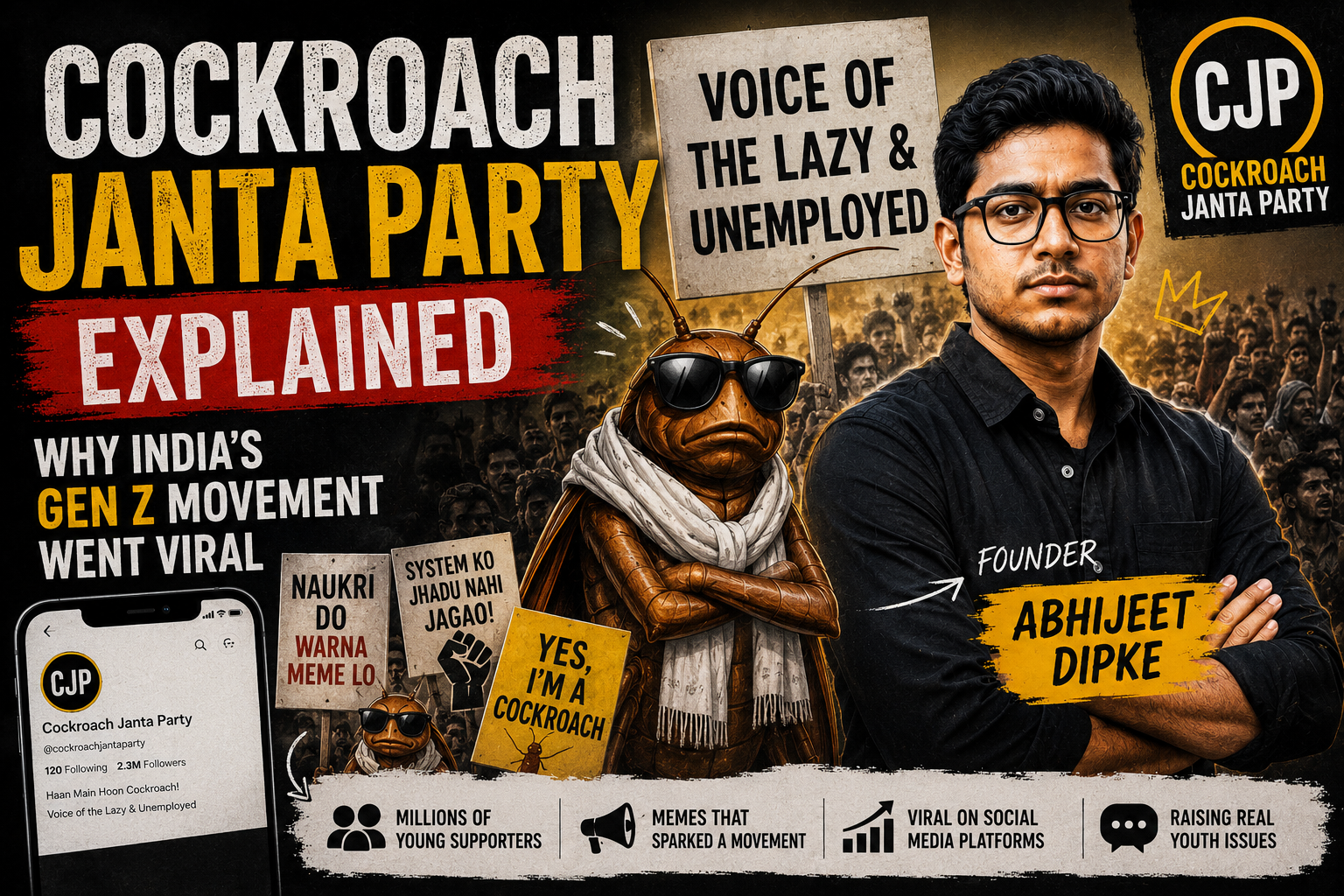
In May 2026, India witnessed the sudden rise of one of the internet’s most unusual and talked-about political movements — the Cockroach Janta Party (CJP). What started as a meme-based online protest quickly transformed into a nationwide viral trend among India’s Gen Z population.
From Instagram reels to trending hashtags on X (Twitter), millions of young users began discussing the movement, sharing memes, and relating to its message about unemployment, inflation, education pressure, and political frustration.
But why did the Cockroach Janta Party become so popular so quickly?
In this article, we explain the full story behind India’s viral Gen Z movement and why it captured the attention of millions.
Also Read: Abhijeet Dipke Biography – The Man Behind India’s Viral Cockroach Janta Party
🚀 Enroll in Live SAP Courses:
🎓 SAP MM (Material Management)
🔗 https://trk.udemy.com/gRoZv2
🎓 SAP PM (Plant Maintenance)
🔗 https://trk.udemy.com/PzaLjX
🎓 SAP SD (Sales and Distribution)
🔗 https://trk.udemy.com/B5KWXx
What is the Cockroach Janta Party?

The Cockroach Janta Party (CJP) is a satire-based political movement founded by Abhijeet Dipke in May 2026.
The movement gained attention after controversial remarks allegedly compared unemployed youth to “cockroaches.” Instead of rejecting the label, supporters adopted it sarcastically and turned it into a symbol of survival, struggle, and resistance.
The movement’s famous slogan became.
“Voice of the Lazy & Unemployed”
Why Did the Movement Go Viral?
Gen Z Related to the Message
One of the biggest reasons behind the movement’s success was that young people felt personally connected to its message.
Many Indian youth today face:
- Unemployment
- High competition
- Career pressure
- Expensive education
- Rising living costs
The movement used humor and memes to express frustrations that many young people already felt silently.
Meme Culture Played a Huge Role
Unlike traditional political campaigns, the Cockroach Janta Party relied heavily on:
- Memes
- Short videos
- Internet humor
- Viral captions
- Relatable social media content
This made the campaign easy to share across platforms like:
- X (Twitter)
- YouTube
Gen Z audiences connected more with funny, relatable content than formal political speeches.
The Power of Internet Satire
Humor with a Serious Message
The movement became successful because it mixed comedy with real social issues.
People initially joined for the memes, but they stayed because the movement discussed serious topics such as:
- Job shortages
- Inflation
- Student struggles
- Economic pressure
- Freedom of expression
This balance between entertainment and reality helped the movement spread rapidly online.
Who is Behind the Movement?
The movement was launched by Abhijeet Dipke, a political communication strategist and digital campaign expert.
Dipke reportedly worked in political communication and social media strategy before launching CJP. His understanding of internet culture and youth psychology became one of the key reasons for the movement’s online success.
Social Media Explosion
Within days of launch:
- Millions of users began following the movement
- Memes flooded Instagram and X
- Influencers discussed the trend
- Hashtags started trending nationally
The movement became one of India’s fastest-growing political meme campaigns.
Many users even changed profile pictures and bios to support the “cockroach” identity humorously.
Why Gen Z Supported It
A Different Kind of Political Communication
Traditional political messaging often feels serious and disconnected from young audiences.
CJP was different because it used.
- Casual language
- Internet slang
- Humor
- Sarcasm
- Relatable jokes
Young users felt the movement spoke their language.
Main Issues Raised by the Movement
1. Youth Unemployment
The movement strongly highlighted the struggles of educated but unemployed youth.
2. Inflation and Financial Pressure
Rising costs of living became another major discussion point.
3. Education System
Students expressed frustration about competitive exams and career uncertainty.
4. Freedom of Expression
Supporters also discussed online criticism, trolling, and freedom of speech.
Controversies Around the Movement
As the movement became larger, controversies also increased.
Critics claimed:
- The movement could have hidden political backing
- Meme politics may oversimplify serious issues
- Viral trends can influence public opinion emotionally
However, supporters argued that satire is a powerful way to expose real problems.
How the Movement Changed Online Politics
The Cockroach Janta Party showed that:
- Memes can become political tools
- Social media movements can spread extremely fast
- Young voters prefer relatable communication
- Digital activism is becoming more powerful in India
Experts described it as a major example of India’s growing “meme politics” culture.
Lessons from the Viral Success
Timing Matters
The movement launched during a moment of public anger and online discussion.
Relatable Content Wins
People share content they emotionally connect with.
Social Media is Powerful.
Modern political influence often begins online.
Humor Increases Reach
Funny content spreads faster than traditional messaging.
Conclusion
The Cockroach Janta Party became viral because it successfully captured the emotions, humor, and frustrations of India’s Gen Z generation. By combining satire, memes, and social commentary, the movement created a new style of digital political activism.
Whether people view it as a serious movement or simply internet satire, one thing is clear — it changed how young Indians discuss politics online and proved that memes can now shape national conversations.