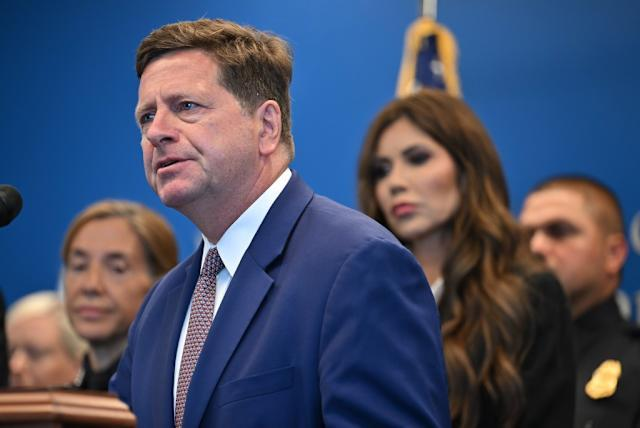
Jay Clayton Biography: From Corporate Lawyer to SEC Chairman and U.S. Attorney: In the world of finance and corporate law, few names have carried as much influence in recent years as Jay Clayton. Best known for serving as Chairman of the U.S. Securities and Exchange Commission (SEC), Clayton built a reputation as a respected corporate lawyer, financial regulator, and public servant. His career reflects a unique combination of legal expertise, business knowledge, and public leadership.
Jay Clayton Biography, Early Life and Education
Jay Clayton was born on July 22, 1966, at Fort Eustis in Newport News, Virginia. He spent much of his childhood in Pennsylvania, where he developed a strong academic foundation and an interest in economics, engineering, and law.
His educational achievements are remarkable. Clayton earned a Bachelor of Science degree in Engineering from the University of Pennsylvania, graduating with top honors. As a recipient of the prestigious Thouron Scholarship, he continued his studies at the University of Cambridge in England, where he obtained both a Bachelor of Arts and a Master of Arts in Economics. He later returned to the University of Pennsylvania to earn his Juris Doctor (J.D.) degree in law.
This combination of engineering, economics, and legal training would later become one of the defining strengths of his professional career.
Also Read: Taylor Sheridan Biography
🚀 Enroll in Live SAP Courses: Best offers
🎓 SAP MM (Material Management)
🔗 https://trk.udemy.com/gRoZv2
Beginning His Legal Career
After completing law school, Clayton began his legal career by serving as a law clerk to Judge Marvin Katz of the U.S. District Court for the Eastern District of Pennsylvania. This role provided him with valuable experience in the American judicial system and laid the groundwork for his future success.
He subsequently joined the prestigious law firm Sullivan & Cromwell LLP, one of the most influential corporate law firms in the United States. Over the next two decades, Clayton specialized in mergers and acquisitions, securities offerings, corporate governance, and regulatory matters. He advised some of the world’s largest corporations and financial institutions on complex transactions worth billions of dollars.
His expertise and leadership eventually led him to become a partner, member of the firm’s management committee, and co-head of its corporate practice. These achievements established him as one of the country’s leading corporate attorneys.
Academic Contributions
Beyond his legal practice, Clayton also pursued an academic career. From 2009 to 2017, he served as a lecturer and adjunct professor at the University of Pennsylvania Law School. There, he taught courses related to mergers and acquisitions and shared his practical business experience with future lawyers.
His ability to bridge the worlds of academia, business, and law helped make him a respected voice in financial regulation and corporate governance.
Appointment as SEC Chairman
A major turning point in Clayton’s career came in 2017 when President Donald Trump nominated him to serve as Chairman of the U.S. Securities and Exchange Commission. After Senate confirmation, he was sworn in as the 32nd Chairman of the SEC on May 4, 2017.
The SEC is responsible for protecting investors, maintaining fair and efficient markets, and facilitating capital formation in the United States. As chairman, Clayton inherited responsibility for overseeing one of the world’s most important financial regulatory agencies.
Leadership at the SEC
During his tenure from 2017 to 2020, Clayton focused heavily on what he often called “Main Street investors”—ordinary Americans who invest for retirement, education, and long-term financial security. Under his leadership, the SEC implemented numerous reforms aimed at improving transparency, modernizing regulations, and strengthening investor protections.
One of his major priorities was updating rules that had not been modernized in decades. He supported efforts to simplify public-company disclosures, improve capital-raising opportunities for businesses, and make financial information more accessible to investors.
Clayton’s SEC also paid significant attention to cybersecurity threats and emerging technologies. As cryptocurrencies and digital assets began attracting widespread public interest, the agency worked to clarify how securities laws applied to these new financial products. The SEC pursued enforcement actions against fraudulent offerings while attempting to encourage responsible innovation.
Navigating Unprecedented Challenges
Clayton’s leadership was tested by several major global events. During his tenure, the SEC dealt with issues ranging from Brexit-related market uncertainty to the rise of digital assets and, most notably, the COVID-19 pandemic.
As financial markets experienced extraordinary volatility during the early stages of the pandemic, the SEC worked to maintain market stability while continuing to protect investors. The agency issued guidance and regulatory relief measures designed to help businesses and financial institutions operate effectively during the crisis.
Many observers credit Clayton with helping the SEC maintain continuity and market confidence during one of the most challenging periods in modern financial history.
Commitment to Diversity and Organizational Development
Another notable aspect of Clayton’s leadership was his emphasis on human capital and organizational development. He advocated for diversity, inclusion, mentorship, and workforce development within the SEC. During his tenure, the agency introduced initiatives aimed at creating a more inclusive workplace and expanding leadership opportunities across the organization.
He frequently argued that an organization’s greatest asset is its people and that strong institutions depend on investing in talent and professional growth.
Life After the SEC
Clayton stepped down as SEC Chairman at the end of 2020 after more than three years in the role. Following his departure, he returned to private-sector work and took on several leadership and advisory positions. He also continued his association with Sullivan & Cromwell and participated in various corporate and policy initiatives.
In subsequent years, he remained an influential figure in discussions involving financial regulation, corporate governance, and capital markets.
U.S. Attorney Role
A new chapter in Clayton’s public-service career began when he was selected to lead the U.S. Attorney’s Office for the Southern District of New York, one of the most prominent federal prosecutorial offices in the United States. The position places him at the center of major investigations involving financial crime, public corruption, and corporate misconduct.
The appointment marked a significant transition from financial regulation to federal law enforcement, demonstrating the broad range of responsibilities he has undertaken throughout his career.
Legacy and Impact
Jay Clayton’s career stands out because of his ability to move successfully between private practice, academia, regulatory leadership, and public service. His engineering background gave him an analytical mindset, his economics training provided a deep understanding of markets, and his legal education equipped him to navigate complex regulatory systems.
Whether viewed as a corporate lawyer, financial regulator, educator, or public official, Clayton has played an important role in shaping modern discussions about investor protection, capital formation, and the future of financial markets.
His story is one of preparation, expertise, and leadership—qualities that enabled him to become one of the most influential figures in American financial regulation during the twenty-first century.