SAP MM Tutorial for Beginners (2026 Guide): Learn SAP Materials Management Step by Step: SAP Materials Management (SAP MM) is one of the most important modules in SAP ERP and SAP S/4HANA. It helps businesses manage procurement, purchasing, inventory, and material planning efficiently. If you’re new to SAP or planning a career as an SAP MM Consultant, this guide will teach you the fundamentals in simple language.
Whether you are a student, fresher, procurement professional, or working in manufacturing, learning SAP MM can open up opportunities in industries such as automotive, steel, pharmaceuticals, retail, oil & gas, and logistics.
What is SAP MM?
SAP MM (Materials Management) is a core SAP module that manages the complete procurement and inventory process of an organisation. It ensures that the right material is available at the right place, at the right time, and at the right cost.
SAP MM integrates with several other SAP modules, including:
- SAP FI (Financial Accounting)
- SAP SD (Sales and Distribution)
- SAP PP (Production Planning)
- SAP QM (Quality Management)
- SAP WM/EWM (Warehouse Management)
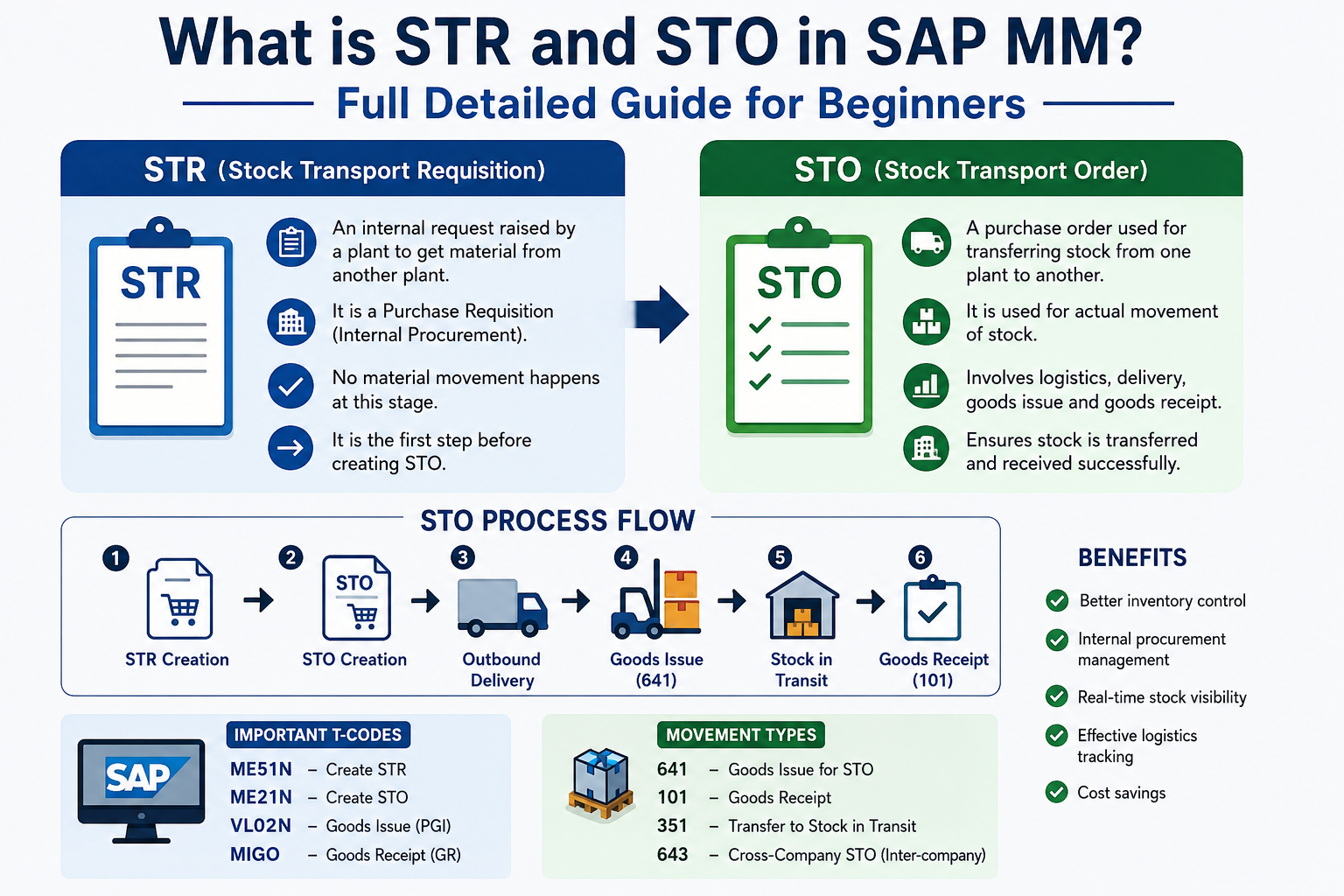
Also Read: What is STR and STO in SAP MM: Full details Guide for Beginners
Affiliate Link
🚀 Enroll in Live SAP Courses:
🎓 SAP MM (Material Management)
🔗 https://trk.udemy.com/gRoZv2
🎓 SAP PM (Plant Maintenance)
🔗 https://trk.udemy.com/PzaLjX
🎓 SAP SD (Sales and Distribution)
🔗 https://trk.udemy.com/B5KWXx
Why is SAP MM Important?
Companies use SAP MM to:
- Streamline purchasing activities
- Reduce procurement costs
- Maintain accurate inventory
- Track material movement
- Improve supplier relationships
- Automate procurement workflows
- Generate real-time reports
- Improve supply chain efficiency
SAP MM Organizational Structure
The organizational structure forms the foundation of SAP MM.
| Component | Description |
|---|---|
| Client | Highest level in SAP |
| Company Code | Represents a legal company |
| Plant | Manufacturing unit or warehouse |
| Storage Location | Stores inventory within a plant |
| Purchasing Organization | Responsible for procurement |
| Purchasing Group | Buyers responsible for purchasing |
SAP MM Master Data
Master data is permanent information used across business processes.
Material Master
Contains details such as:
- Material Number
- Description
- Unit of Measure
- Material Type
- Valuation Class
- Purchasing Data
- Storage Information
Vendor Master
Stores supplier information including:
- Vendor Name
- Address
- Payment Terms
- Bank Details
- Tax Information
Purchasing Info Record
Maintains the relationship between a material and a vendor, including pricing and delivery details.
Source List
Defines approved suppliers for purchasing a material.
Quota Arrangement
Distributes procurement among multiple vendors based on predefined percentages.
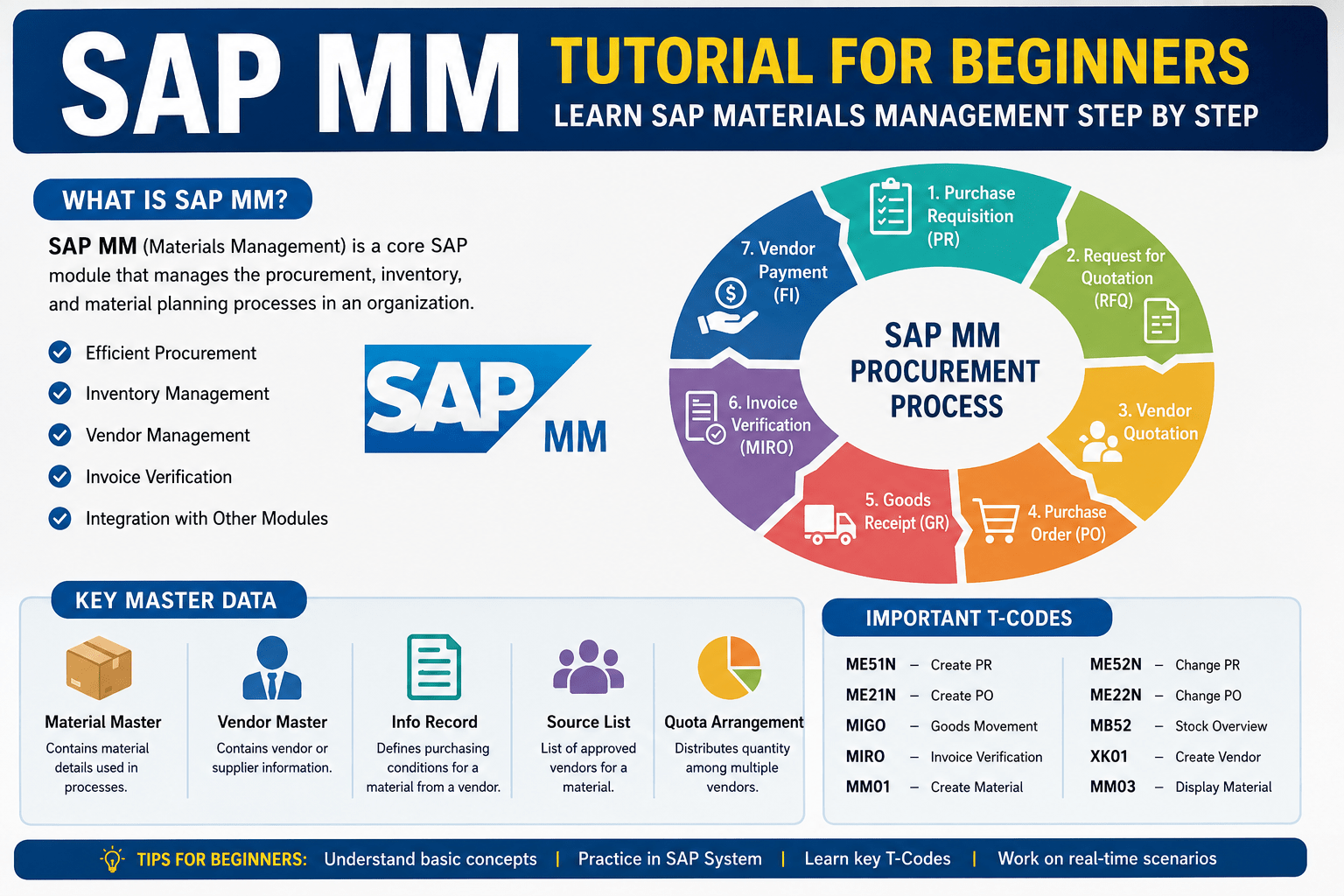
SAP MM Procurement Process
The standard procurement cycle includes:
- Requirement Identification
- Purchase Requisition (PR)
- Request for Quotation (RFQ)
- Vendor Quotation
- Purchase Order (PO)
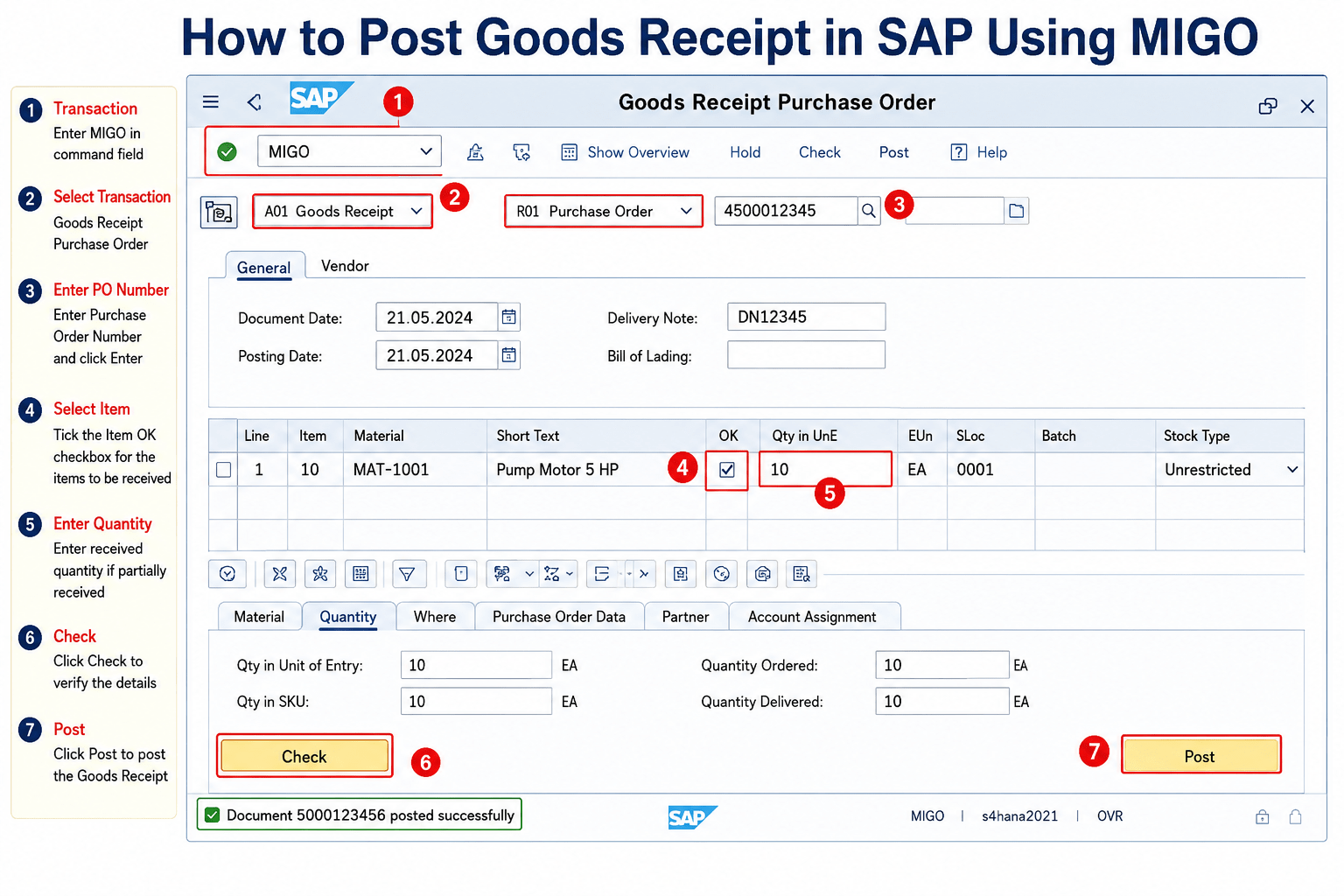
- Goods Receipt (GR)
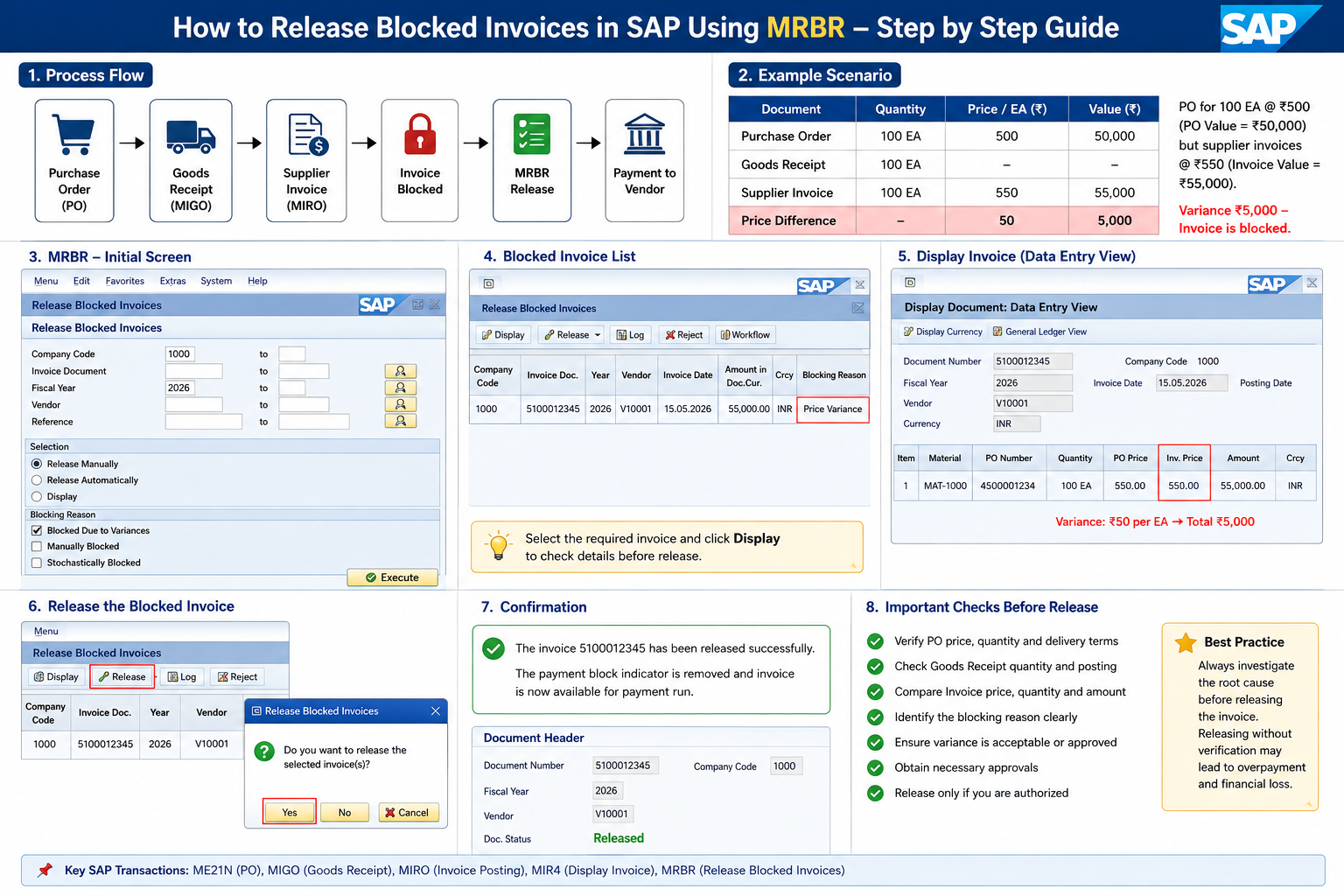
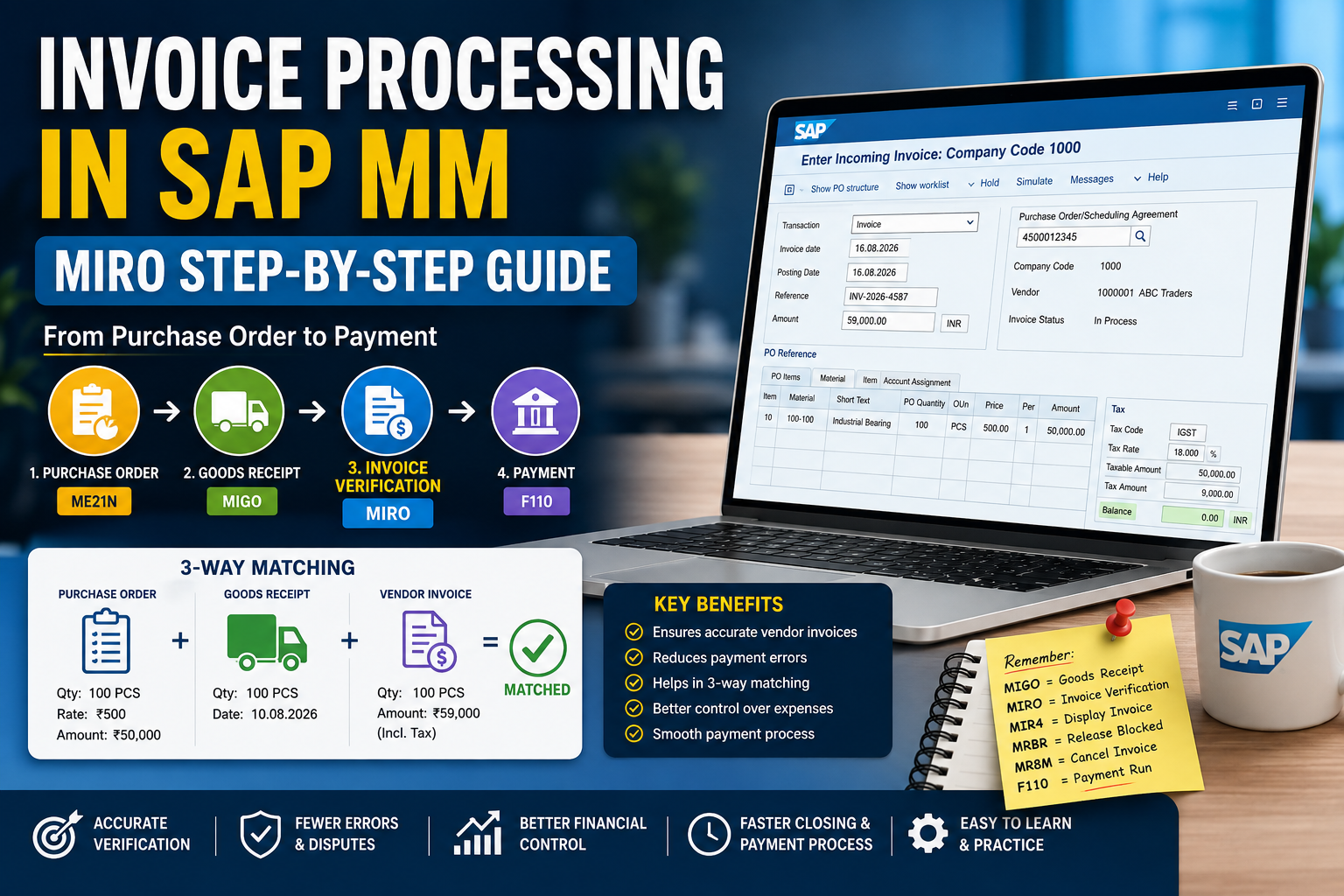
- Invoice Verification (MIRO)
- Vendor Payment (handled in SAP FI)
This process ensures transparency, cost control, and accurate inventory updates.
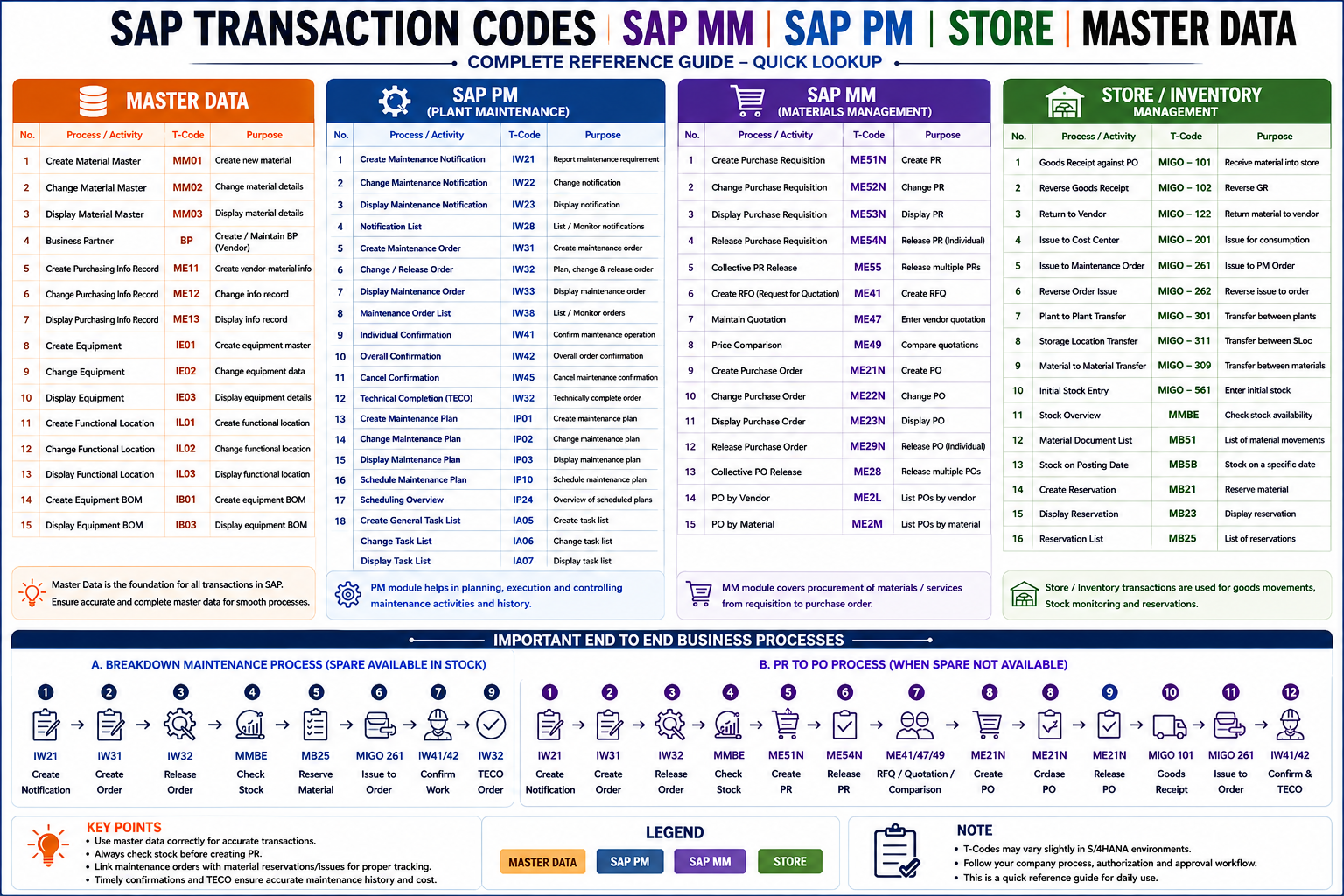
Important SAP MM Transactions (T-Codes)
| T-Code | Purpose |
|---|---|
| ME51N | Create Purchase Requisition |
| ME52N | Change Purchase Requisition |
| ME53N | Display Purchase Requisition |
| ME21N | Create Purchase Order |
| ME22N | Change Purchase Order |
| ME23N | Display Purchase Order |
| MIGO | Goods Receipt and Goods Issue |
| MIRO | Invoice Verification |
| MM01 | Create Material Master |
| MM02 | Change Material Master |
| MM03 | Display Material Master |
| XK01 | Create Vendor (ECC) |
| MB52 | Stock Overview |
Inventory Management in SAP MM
Inventory Management helps organizations track stock accurately.
Common stock categories include:
- Unrestricted Stock
- Quality Inspection Stock
- Blocked Stock
- Reserved Stock
- Transit Stock
Common inventory activities include:
- Goods Receipt
- Goods Issue
- Transfer Posting
- Physical Inventory
- Stock Adjustment
Integration with Other SAP Modules
SAP MM works closely with:
- SAP FI: Automatic accounting entries during goods receipt and invoice posting.
- SAP SD: Material availability during sales order processing.
- SAP PP: Material planning for production.
- SAP QM: Quality inspection after goods receipt.
- SAP WM/EWM: Warehouse storage and movement.
Career Opportunities in SAP MM
Popular job roles include:
- SAP MM Consultant
- SAP MM Functional Consultant
- Procurement Executive
- Purchase Officer
- Inventory Analyst
- Materials Manager
- SAP Support Consultant
Professionals with SAP MM skills are in demand across manufacturing, automotive, logistics, healthcare, retail, energy, and IT consulting companies.
Tips for Beginners
- Learn procurement concepts before SAP transactions.
- Understand organizational structure thoroughly.
- Practice creating materials and purchase orders.
- Learn the most-used T-Codes.
- Explore SAP S/4HANA and SAP Fiori interfaces.
- Practice real business scenarios in a training system.
FAQ’S
Is SAP MM difficult to learn?
No. With a basic understanding of procurement and regular practice, beginners can learn SAP MM effectively.
Do I need programming knowledge?
No. SAP MM is primarily a functional module and does not require programming skills.
How long does it take to learn SAP MM?
Most beginners can learn the fundamentals in 2–3 months with consistent study and hands-on practice.
Is SAP MM a good career choice?
Yes. SAP MM professionals are in demand worldwide because procurement and inventory management are essential business functions.
Conclusion
SAP MM is one of the most valuable SAP modules for professionals interested in procurement, purchasing, and supply chain management. By understanding master data, procurement processes, inventory management, and key transactions, beginners can build a strong foundation for a successful SAP career. Continue practising with real business scenarios and SAP systems to strengthen your knowledge and prepare for certification or consulting roles.