What Is a Merchant Account? A Complete Guide for Small Businesses and Online Sellers: In today’s digital economy, customers expect businesses to offer fast, secure, and convenient payment options. Whether you’re running an online store, selling digital products, offering freelance services, or managing a subscription-based business, accepting electronic payments is no longer optional—it’s essential.
This is where a merchant account plays a crucial role. A merchant account enables businesses to process payments made through credit cards, debit cards, and other digital payment methods. Understanding how it works can help you choose the right payment solution and improve your customers’ checkout experience.
In this guide, we’ll explain what a merchant account is, how it works, its benefits, common fees, and how to select the best option for your business.
What Is a Merchant Account?
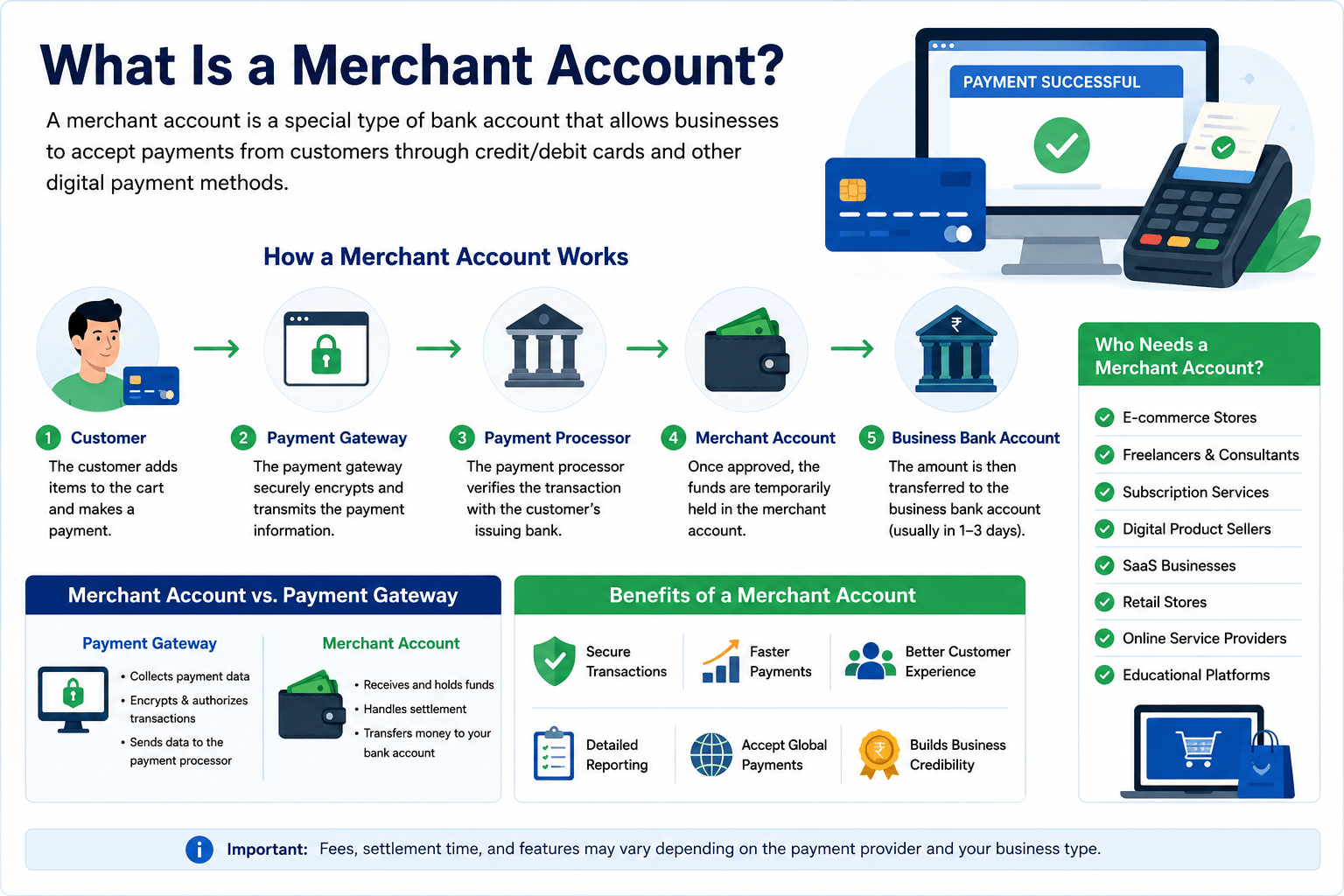
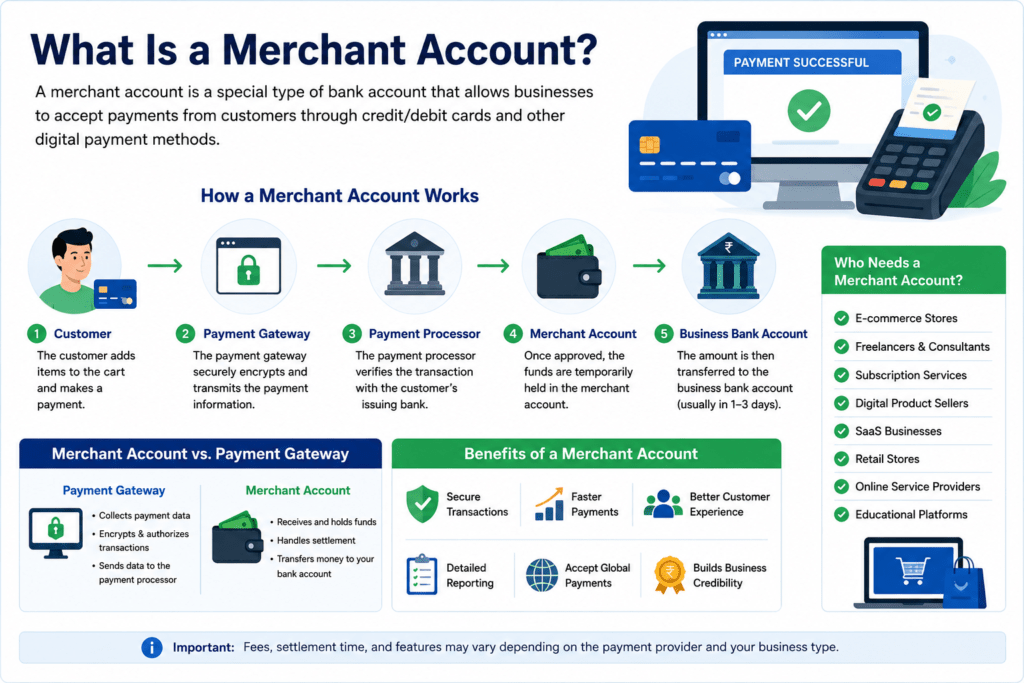
A merchant account is a specialized business account that allows companies to accept electronic payments from customers. It acts as an intermediary between the customer’s bank and your business bank account.
When a customer makes a payment, the funds are first processed through the merchant account. After the payment is verified and approved, the money is transferred to your business bank account. This process usually takes one to three business days, depending on your payment provider.
Many modern payment service providers offer integrated solutions where the merchant account and payment gateway are included in a single platform, making setup easier for small businesses.
Also READ: What Is a Blog and How to Earn Money from a Blog? A Complete Beginner’s Guide (2026)
How Does a Merchant Account Work?
The payment process is simple but involves several secure steps:
- A customer chooses a product or service and proceeds to checkout.
- The customer pays using a credit card, debit card, or another supported payment method.
- The payment gateway encrypts and securely transmits the payment information.
- The customer’s bank verifies that sufficient funds are available.
- The payment is approved or declined.
- If approved, the money is temporarily held in the merchant account.
- The payment is then settled into the business’s bank account.
This entire authorization process usually takes only a few seconds, ensuring a smooth shopping experience.
Merchant Account vs. Payment Gateway
Many people confuse a merchant account with a payment gateway, but they serve different purposes.
A payment gateway securely collects and transmits payment information from the customer to the payment processor. A merchant account, on the other hand, temporarily receives the funds before they are deposited into your business bank account.
Think of the payment gateway as the secure communication channel, while the merchant account is responsible for handling the funds.
Benefits of a Merchant Account
Using a merchant account offers several advantages for businesses of all sizes.
Secure Payment Processing
Merchant accounts work with payment processors that use encryption, fraud detection, and security standards to protect customer information.
Improved Customer Experience
Offering multiple payment options makes checkout faster and more convenient, increasing customer satisfaction and reducing abandoned purchases.
Faster Settlements
Most providers transfer funds to your bank account within one to three business days, improving cash flow.
Professional Business Image
Customers are more likely to trust businesses that provide secure and recognized payment methods.
Better Financial Reporting
Merchant account providers often include dashboards, sales reports, and transaction histories that simplify bookkeeping and tax preparation.
Who Needs a Merchant Account?
A merchant account is useful for businesses that accept digital payments, including:
- Online stores
- Freelancers and consultants
- Bloggers selling digital products
- Educational platforms
- Software-as-a-Service (SaaS) businesses
- Subscription services
- Restaurants offering online ordering
- Healthcare providers
- Retail stores accepting card payments
If your business regularly receives online payments, a merchant account can help streamline operations and improve customer confidence.
Common Fees
Before selecting a provider, it’s important to understand the costs involved.
Typical merchant account fees include:
- Setup fee
- Monthly maintenance fee
- Transaction processing fee
- Chargeback fee
- Refund processing fee
- International payment fee
Some providers offer pay-as-you-go pricing with no monthly fees, making them suitable for startups and small businesses.
How to Choose the Right Merchant Account
Choosing the right merchant account depends on your business needs. Consider the following factors:
- Transparent pricing with no hidden fees
- Fast settlement times
- Support for multiple payment methods
- Strong security and fraud protection
- Easy integration with your website or eCommerce platform
- Responsive customer support
- International payment support if you sell globally
Comparing providers before making a decision can help you find the best balance between features and cost.
Tips for Getting Approved
To improve your chances of merchant account approval:
- Register your business legally.
- Maintain a professional website.
- Clearly display refund, shipping, and privacy policies.
- Provide accurate business information.
- Use a business bank account.
- Keep all required documents updated.
Following these best practices demonstrates credibility and reduces the likelihood of delays during verification.
Common Mistakes to Avoid
Many new business owners make avoidable mistakes when setting up payment processing.
Avoid these common issues:
- Choosing a provider based only on the lowest transaction fee.
- Ignoring chargeback policies.
- Failing to secure customer payment information.
- Not reading the provider’s terms and conditions.
- Selecting a payment solution that cannot scale as your business grows.
Planning ahead can save both time and money.
Frequently Asked Questions
Is a merchant account required for every business?
No. Businesses that only receive bank transfers or cash payments may not need one. However, businesses accepting online card payments typically benefit from a merchant account or an all-in-one payment service.
Can freelancers use a merchant account?
Yes. Freelancers, consultants, designers, writers, and developers can use merchant accounts or payment service providers to receive client payments securely.
How long does it take to receive payments?
Most providers settle payments within one to three business days, although settlement times may vary.
Is a merchant account secure?
Yes. Reputable providers use advanced encryption, fraud monitoring, and industry-standard security practices to protect payment information.
Conclusion
A merchant account is an essential part of modern digital commerce. It allows businesses to accept secure electronic payments, improve customer trust, and streamline payment processing. Whether you’re starting an online business, selling digital products, or offering professional services, choosing the right merchant account can make your payment process faster, safer, and more efficient.
Before selecting a provider, compare fees, settlement times, supported payment methods, and security features. A reliable merchant account not only simplifies transactions but also supports the long-term growth of your business by providing a seamless payment experience for your customers.